Pre-Listing Inspection in Huntington Beach: Is It Worth the Cost?
Quick answer
A pre-listing inspection in Huntington Beach typically costs $300 to $600 and covers roof, plumbing, electrical, HVAC, foundation, and coastal moisture issues common in older homes here. It does not force repairs, but it gives you control over what you disclose and how. The detached single-family median in Huntington Beach is $1,649,500 (226 sales, 90 days ending 2026-09-30, CRMLS). At that price, early transparency is worth the upfront cost.
- A full home inspection in Orange County typically runs $300 to $600, paid upfront before listing.
- California law requires sellers to disclose known material defects, inspection or not.
- A pre-listing inspection reduces buyer surprises and post-offer renegotiation risk.
- Escrow in Huntington Beach typically closes in about 30 days after opening.
Last verified: October 2026 · Sources: California Civil Code Section 1102, Transfer Disclosure Statement, City of Huntington Beach, Community Development, Sunset Beach Planning
You have lived in your Huntington Beach home long enough to know every creak in the floor. Now you are thinking about selling, cashing out some of that equity, and moving somewhere smaller.
Before you list, one question comes up almost every time: do you need a pre-listing inspection in Huntington Beach, or can you skip it? Gantry Wilson has personally sold more than 300 homes in Huntington Beach and has served Huntington Beach and Orange County since 2004.
This article gives you a plain answer, with real numbers, so you can make a calm decision on your own timeline.
What a pre-listing inspection actually covers
A home inspection is a visual examination of the major systems and components of your property. The inspector walks the roof, checks the plumbing and electrical panels, tests the HVAC, looks at the foundation, and examines the structure from the attic to the crawl space or slab.
The goal is a written report that tells you what is working, what is aging, and what needs attention.
Inspectors also check for moisture intrusion, which matters a great deal in a coastal city. They note deferred maintenance items, safety concerns, and anything that a buyer’s inspector is likely to flag later. Cosmetic issues such as paint, carpet, and landscaping are generally outside the scope.
A sewer lateral inspection is often ordered separately. It uses a camera to check the line from the house to the city connection. In an older home, this step is worth doing, because clay or cast-iron lines can crack or develop root intrusion over decades.
Permits are not always part of a standard inspection, but a good inspector will note additions or alterations that look unpermitted. You will want to verify permit history separately through the city, and that step is worth doing before you list.
Buyers ask about it, and having the records ready prevents delays in escrow.
The report does not tell you what to fix. It tells you what exists. What you do with that information is your decision, and that is exactly the point of getting the inspection before a buyer does.
Coastal moisture and older Huntington Beach homes: why a pre-listing inspection matters here
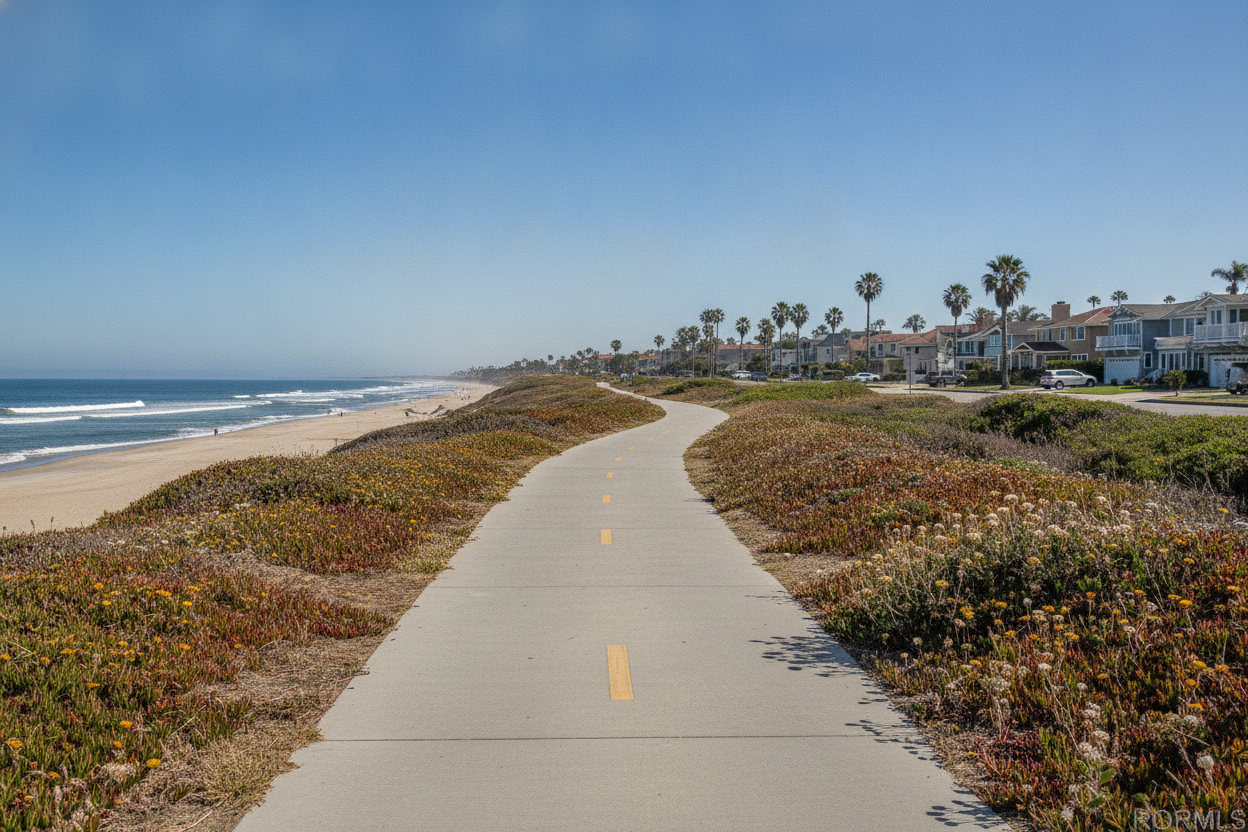
Huntington Beach sits on the Pacific Ocean, and the salt air affects everything over time. Metal fasteners corrode. Wood framing near exterior walls absorbs moisture. Roofing materials degrade faster than they would ten miles inland.
These are not hypothetical risks; they are routine findings in homes built in the 1960s and 1970s, which make up a large share of the city’s detached housing stock.
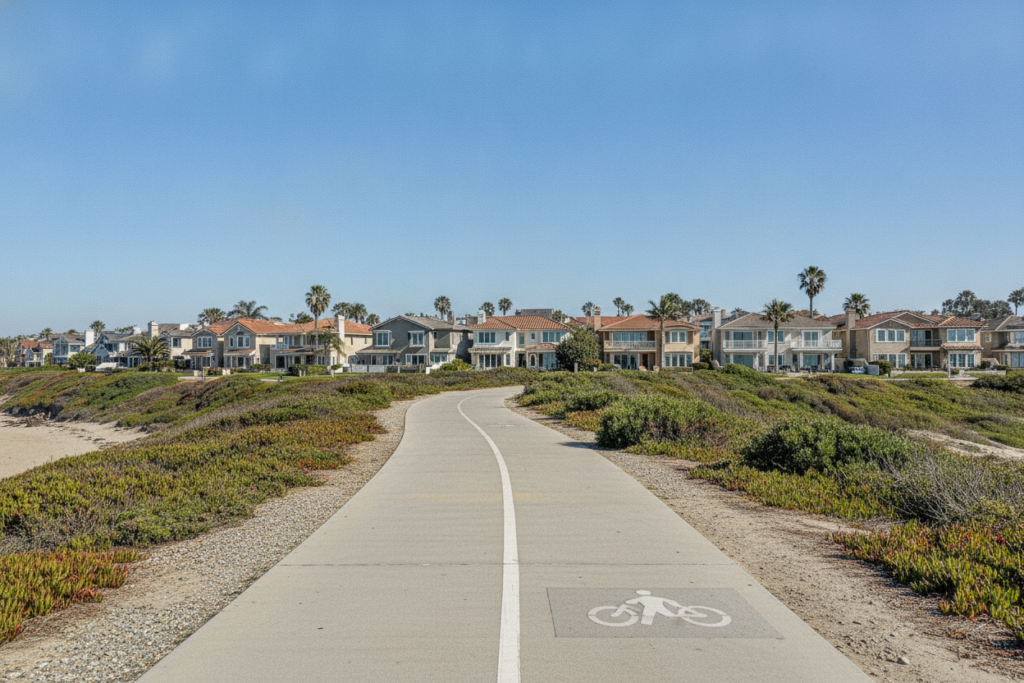
Areas with direct water exposure see the most wear. Huntington Harbour sits inside Huntington Beach city limits on five man-made islands and a mainland section in the northwest corner of the city. Homes there back directly onto navigable channels. Salt air and tidal moisture reach every exterior surface.
An inspector familiar with coastal properties will look specifically at seawall conditions, dock hardware, and any framing near the waterline.
Sunset Beach, also inside Huntington Beach city limits after annexation in 2011, sits directly on the sand. Homes there face the most aggressive coastal exposure of any neighborhood in the city.
Buyers purchasing in Sunset Beach almost always order thorough inspections, and sellers who have already completed one are in a stronger position.
Even homes a mile or two from the water show signs of coastal wear that inland inspectors sometimes miss. Stucco cracks, window frame corrosion, and attic ventilation issues are common in older homes throughout the city. A local inspector who works the coast regularly will know what to look for.
The practical point is this: a buyer’s inspector will find these things. If you find them first, you decide how to handle them. That is a meaningful advantage when you are sitting on decades of equity and want a clean sale.
"Attention to detail and super friendly!"
Mike Estrada
Inspection cost and what you will learn about repairs
A full home inspection in Orange County typically runs $300 to $600. The price depends on the size of the home, its age, and the scope of the inspection. Some inspectors charge a bit more for coastal properties or homes over 50 years old. A sewer lateral camera inspection adds roughly $150 to $300 on top of that.
These are one-time fees paid before you list.
The report identifies defects and conditions. It does not mandate repairs. You are not required to fix anything simply because an inspector noted it. What you are required to do, under California law, is disclose known material facts to buyers.
California Civil Code Section 1102 establishes the Transfer Disclosure Statement requirement. Sellers must disclose known material defects.
A pre-listing inspection is optional, but once you have the report, the items in it become known to you, and they must be disclosed. That is not a reason to avoid the inspection; it is a reason to do it thoughtfully and with a plan.
The advantage of knowing early is that you control the narrative. You can repair a specific item, price the home to reflect a known condition, or disclose it clearly and let buyers factor it in before they make an offer. All three are legitimate strategies.
What you cannot do is be caught off guard by a finding after you have accepted an offer and opened escrow.
For a home with a detached single-family median of $1,649,500 in Huntington Beach (226 sales, 90 days ending 2026-09-30, CRMLS), spending $400 to $600 on an inspection before listing is a small cost relative to the equity at stake. The math is straightforward.
Disclosure, permits, and HOA documents: what else to verify
The Transfer Disclosure Statement is the primary seller disclosure form in California. You fill it out based on your personal knowledge of the property. It covers everything from roof condition and plumbing leaks to neighborhood nuisances and any legal actions affecting the property.
A pre-listing inspection helps you fill it out accurately.
The Natural Hazard Disclosure report is a separate document, typically ordered through a disclosure company. It tells buyers whether the property is in a flood zone, fire hazard area, earthquake fault zone, or other designated hazard area. This is a standard part of every California sale and is not optional.
Permit history is worth pulling before you list, especially if you have done any remodeling over the years. Additions, garage conversions, room expansions, and electrical upgrades all require permits.
Buyers and their inspectors look for work that does not match the permitted square footage or that shows signs of unpermitted construction. Having the permit records in hand, or knowing what was not permitted and disclosing it, prevents friction later.
About 87 percent of detached single-family homes in Huntington Beach carry no HOA, according to CRMLS data through September 30, 2026. If your home does have an HOA, you will need to provide governing documents, CC&Rs, current financials, and meeting minutes as part of the disclosure package.
Buyers have a right to review these, and gathering them early keeps escrow on schedule.
If you have questions about how capital gains, Proposition 19, or a potential 1031 exchange might affect your sale, those are conversations to have with your CPA or tax advisor before you list.
A real estate agent can explain the general concepts, but the specifics of your tax situation require a qualified professional.
"Gantry put us first, letting us lead the house hunting journey. Great knowledge of the industry’s ins and outs. His word is gold"
Shawn Ferguson
Pre-listing inspection versus buyer’s inspection: timing and strategy
A pre-listing inspection happens before you put the home on the market. You order it, you pay for it, and you receive the report. A buyer’s inspection happens after you accept an offer, typically within the first ten to seventeen days of escrow. The buyer orders it and pays for it, and their inspector reports to them.
The difference in timing is the whole point. When a buyer’s inspector finds a significant issue, the buyer has leverage. They can ask for a price reduction, request repairs, or cancel the contract. In a market where buyers have options, that leverage is real.
Completing a pre-listing inspection removes the element of surprise by putting the information in your hands first.
Orange County had 3.1 months of supply in July 2026, which puts the market in roughly balanced territory. The median listing spent 26 days on the market that month, down from 28 days a year earlier. In a market where homes are moving but buyers have choices, condition and transparency matter.
A seller who has already done the inspection and disclosed findings clearly is a seller buyers trust.
Escrow in Huntington Beach typically closes in about 30 days after opening. That is a short window. If a buyer’s inspector surfaces a major issue during that window, you are negotiating under time pressure. Getting ahead of that with your own inspection gives you the time to think clearly, not react quickly.
A pre-listing inspection does not eliminate all buyer concerns. Buyers may still order their own inspection, and their inspector may find something yours missed. The most common post-offer renegotiations happen because buyers are surprised, and reducing surprises is the whole strategy.
For a deeper look at how preparation fits into the broader selling process, resources on pre-listing preparation cover related ground for higher-priced properties.
Orange County market context: why condition matters now
Orange County had 3.1 months of supply in July 2026. That puts the market in roughly balanced territory, not the frenzied seller’s market of a few years ago, and not a buyer’s market either. In a balanced market, buyers have enough choices that they can and do walk away from homes with unresolved condition questions.
The median listing in Orange County spent 26 days on the market in July 2026, compared to 28 days a year earlier. That is a modest improvement, but it reflects a market where well-prepared homes move and unprepared ones sit.
Expected market time for attached homes was notably longer at 128 days versus 99 days for detached homes in late 2026.
In Huntington Beach specifically, detached single-family homes sold at 98.5 percent of original list price over the 90 days ending September 30, 2026 (CRMLS). That means the price you set at listing is close to the price you get.
Condition issues that surface after listing, or after offer acceptance, tend to erode that number.
The citywide detached median of $1,649,500 reflects 226 closed sales over 90 days. Homes in the northwest interior (zip 92647) had a median of $1,245,000 over the same period, while Huntington Harbour waterfront homes ran about $4,000,000 (39 sales, 12 months ending 2026-09-30, CRMLS).
Across all these price points, buyers are doing their homework and their inspectors are thorough.
Preparation is not about urgency. It is about arriving at the negotiating table with information, not uncertainty. A pre-listing inspection is one of the most direct ways to accomplish that.
What to do next before you list
The first step is a conversation, not a commitment. Before you schedule an inspection or call a contractor, sit down with a local Huntington Beach real estate professional and talk through the home’s age, any known issues, and your general timeline.
That conversation shapes everything else, including whether a pre-listing inspection makes sense for your specific situation.
If you decide to move forward, choose an inspector who works coastal Orange County regularly. Salt air, moisture intrusion, and older electrical panels are things a coastal inspector sees every week. The report you receive will be more useful than one from a generalist who rarely works near the water.
Once you have the report, you and your agent review it together. You decide what to repair, what to disclose as-is, and how to price the home to reflect its condition honestly. That process takes time, and that is fine. There is no reason to rush it.
Leaving a home you have lived in for decades is not a small thing. The inspection is just one piece of a larger decision. Getting the information early means you make that decision with clarity, not under pressure from a buyer’s contingency deadline.
If you are also thinking about where you might land after the sale, resources comparing nearby markets lay out the numbers for several options.
Fountain Valley’s detached single-family median was $1,510,000 (60 sales, 90 days ending 2026-08-25, CRMLS), and Westminster came in at $1,200,000 (55 sales, same window, CRMLS). Both are meaningful steps down from the Huntington Beach citywide median, which is where the equity conversation gets interesting.
The decision about a pre-listing inspection is yours to make. The goal here is to give you enough information to make it confidently, on your own schedule, without pressure.
For longtime Huntington Beach homeowners
What is your Huntington Beach home actually worth today?
Get a data-backed home value review from a broker who has sold here since 2004. Not an online estimate, no pressure, and no obligation.
Prefer to talk now? Call or text 714-500-7797 · Serving coastal Orange County since 2004
Questions clients ask about pre-listing inspection in Huntington Beach
How much does a pre-listing inspection cost in Huntington Beach?
A full home inspection in Orange County typically runs $300 to $600, depending on the home’s size and age. Inspectors who specialize in coastal properties or older homes sometimes charge toward the higher end of that range. A sewer lateral camera inspection, which is worth ordering separately on an older home, adds roughly $150 to $300. These are one-time fees paid before you list, and they are not contingent on the sale closing.
If the inspection finds problems, do I have to fix them before I sell?
No. A pre-listing inspection is optional, and you control what you do with the report. You can repair specific items, disclose conditions as-is and price accordingly, or use the findings to set realistic expectations with buyers before they make an offer. California law requires you to disclose known material defects, but the inspection itself does not force repairs. The report gives you options; it does not take them away.
Will a pre-listing inspection help me avoid buyer renegotiation after their inspection?
It can help significantly. When buyers are surprised by inspection findings after making an offer, they have leverage to ask for price reductions or repairs. If you have already identified issues and disclosed them clearly in your listing, buyers factor that in before they offer. It does not eliminate all renegotiation, but it removes the element of surprise, which is where most post-offer friction comes from in a balanced Orange County market.
What’s the difference between a pre-listing inspection and the inspection a buyer orders?
A pre-listing inspection happens before you list and is your choice. You order it, pay for it, and receive the report. A buyer’s inspection happens after they make an offer, typically within the first ten to seventeen days of escrow. The buyer orders it and their inspector reports to them. The timing difference is the key: a pre-listing inspection gives you time to decide how to handle issues calmly, while a buyer’s inspection can trigger renegotiation or cancellation under escrow deadline pressure.
Do I need to disclose roof, plumbing, or electrical issues even if I don’t get an inspection?
Yes. California Civil Code Section 1102 requires sellers to disclose known material defects through the Transfer Disclosure Statement. If you know your roof is aging, your plumbing has had issues, or your electrical panel is original to a 1960s build, those facts must be disclosed to buyers, inspection or not. A pre-listing inspection helps you know what to disclose accurately and completely, which protects you after the sale closes as well.
How long does escrow take after I accept an offer in Huntington Beach?
Escrow in Huntington Beach typically closes in about 30 days or less after opening, regardless of neighborhood. That is a short window. Having your inspection report, permit records, Natural Hazard Disclosure, and HOA documents ready before you list means the escrow process moves without delays caused by missing paperwork. Buyers and their lenders work on tight timelines, and sellers who arrive at escrow prepared tend to close on schedule with fewer last-minute complications.
What to do right now
Here is what to do right now. Pull out what you know about your home: the age of the roof, any plumbing work you have had done, electrical upgrades, additions, and anything you have noticed but not addressed. Write it down. Then schedule a conversation with a local Huntington Beach real estate professional to talk through your timeline and whether a pre-listing inspection fits your situation. You do not need to decide everything today. Getting the information in hand before a buyer’s inspector does puts you in control of a sale that represents decades of equity. That is worth a phone call and a $400 inspection fee. Gantry Wilson has been serving Huntington Beach and Orange County since 2004 and has personally sold more than 300 homes in this city. The next step is yours to take, at your pace.
The next step
Ready to talk through your Huntington Beach move?
Tell me where you are in the process and I will map out your options, your numbers, and your timing. 15 minutes, zero pressure.
Schedule my free 15 minute call
Prefer to talk now? Call or text 714-500-7797 · Serving coastal Orange County since 2004
Know what Huntington Beach homes are really selling for
One short email each week: new listings, closed sales, and where prices are heading. Free, and easy to leave anytime.
Gantry Wilson · Gantry Wilson Group · Real Brokerage · Huntington Beach, CA · DRE# 01412779
Trusted. Local. Proven.