Insurance Before Choosing a Coastal City: A Risk-Smart Buyer’s Read
Quick answer
Insurance before choosing a coastal city should include homeowners, flood, earthquake, and, if buying a condo, an HO-6 policy. Standard homeowners policies generally exclude flood damage. Flood coverage carries a 30-day waiting period unless a lender requires it at purchase. In coastal Orange County, detached single-family medians run from $1,649,500 in Huntington Beach to $4,550,000 in Newport Beach (CRMLS). The combined premium and deductible stack can meaningfully shift your budget.
- Standard homeowners policies generally exclude flood, mudslide, and debris-flow damage in California.
- Flood insurance has a 30-day waiting period, with an exception when a lender requires it at purchase.
- Orange County identifies coastal flooding and large waves as storm hazards for the coast.
- Run quotes for homeowners, flood, earthquake, and excess liability before you make an offer, not after.
Last verified: October 2026 · Sources: California Department of Insurance
You are comparing coastal Orange County cities from another metro, probably doing most of your research on a screen. Price, commute, and lifestyle tend to dominate the list. Insurance rarely does.
That is a problem, because the right insurance stack, or the wrong one, can shift your monthly cost by hundreds of dollars and your out-of-pocket risk by tens of thousands. Gantry Wilson has served Huntington Beach and Orange County since 2004.
This read covers what to line up before choosing a coastal city, what standard policies miss, and how to use insurance quotes as a city-selection screen before you ever make an offer.
Why insurance before choosing a coastal city matters more than most buyers expect
The purchase price is the number everyone watches. The insurance stack is the number that quietly reshapes affordability after you move in.
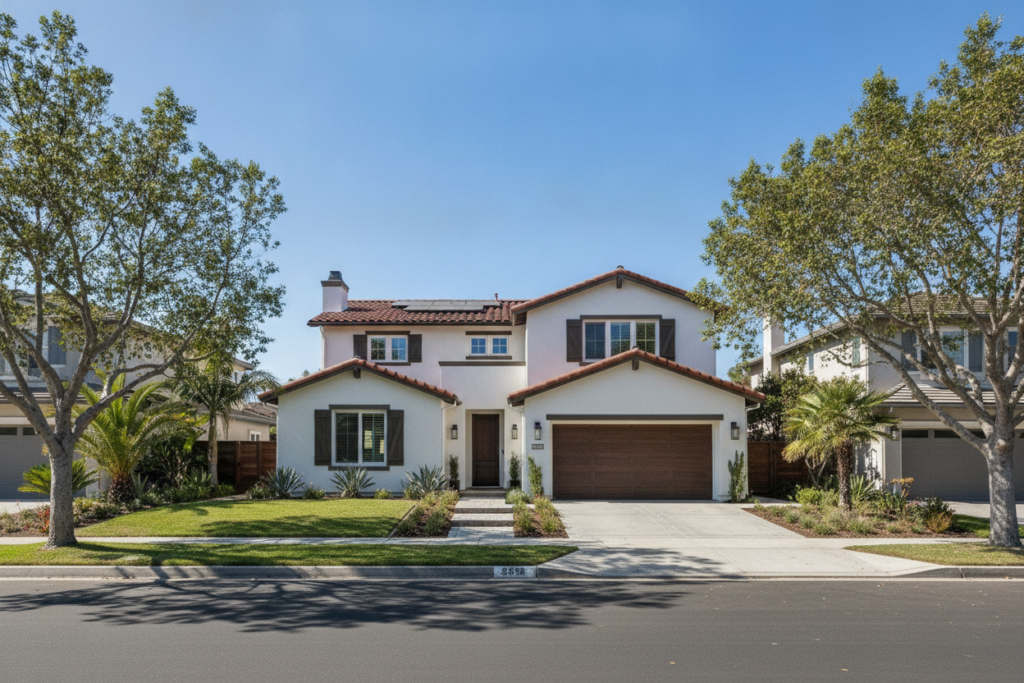
On a $1.6 million detached home in Huntington Beach, the difference between a standard admitted carrier and a California FAIR Plan plus a wrap policy can run several thousand dollars a year.
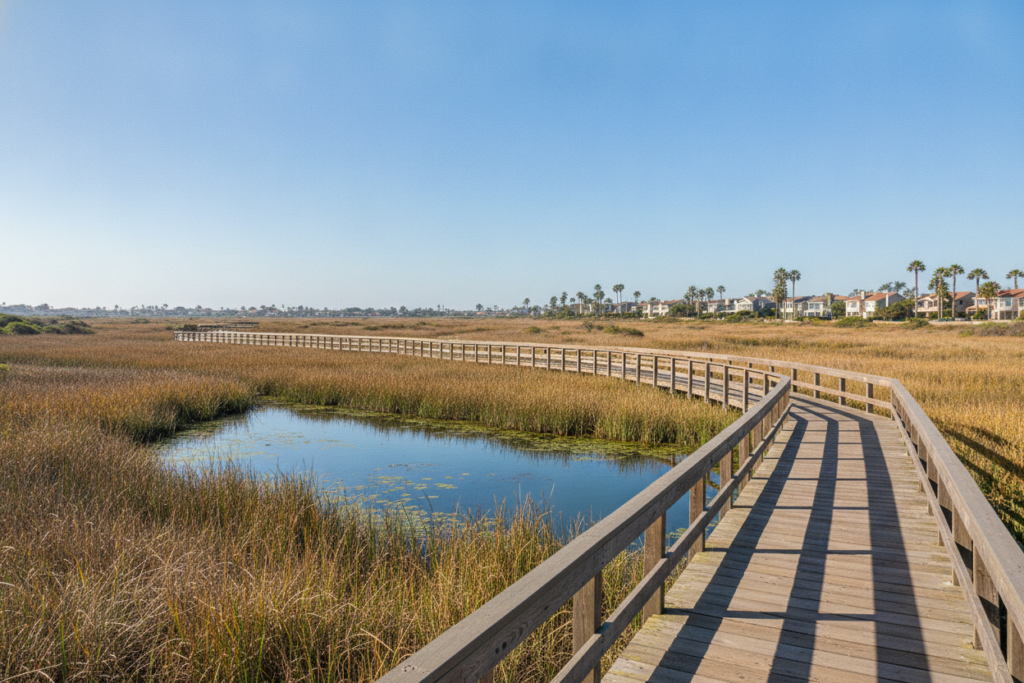
Coastal Orange County is not a single insurance market. A home two blocks from the sand in Sunset Beach, inside Huntington Beach city limits, faces different underwriting than a home a mile inland in the same city. Lenders, carriers, and flood-zone maps all draw their own lines.
Orange County identifies coastal flooding and large waves among the potential impacts of major storms along the coast. That is not a reason to avoid the coast.
It is a reason to know exactly what your policy covers before you are in escrow. Orange County also notes that storm impacts can cause road closures, power outages, and infrastructure damage in coastal areas. Those secondary effects can trigger additional claims that a buyer with incomplete coverage is not prepared for.
Running insurance quotes early, before you settle on a city or a neighborhood, turns a reactive task into a decision tool. A quote that comes back at twice what you budgeted is useful information at the search stage. It is painful information the week before closing.
The cities covered most often in this price range, Huntington Beach, Newport Beach, Seal Beach, Dana Point, San Clemente, and Laguna Beach, each have distinct flood-zone profiles, HOA structures, and carrier availability. Treat insurance as a city-level variable, not a closing-week checkbox.
What standard homeowners insurance does and does not cover on the coast
A standard homeowners policy covers fire, wind, theft, and liability.
It does not cover flooding. California officials state that most homeowners policies do not cover flooding, mudslides, or debris flows. That exclusion applies whether the water comes from a storm surge, an overflowing channel, or rain-saturated ground.
Wind-driven rain is a gray area. Some policies cover damage caused by wind that forces rain through a broken window or damaged roof. They do not cover water that enters through the foundation, a door threshold, or a seawall breach. The distinction matters on a canal-front lot in Huntington Harbour.
Wildfire exclusions have become more common in coastal California. Some admitted carriers have declined to renew policies in ZIP codes they consider elevated risk. If a carrier has nonrenewed policies in the ZIP code you are targeting, ask about it before you make an offer, not after.
Earthquake damage is also excluded from standard homeowners policies. California offers earthquake coverage through the California Earthquake Authority and through private carriers. Premiums vary by construction type, foundation, and proximity to fault lines.
A 1960s wood-frame home in Huntington Harbour and a newer concrete-reinforced build in Dana Point will quote very differently.
The practical takeaway is that a standard policy is a starting point, not a complete solution. On a coastal purchase in the $1 million to $4 million range, you likely need at least three separate policies: homeowners, flood, and earthquake.
Excess liability, sometimes called an umbrella policy, is worth adding if you have a dock, a pool, or significant assets to protect.
"I am grateful for everything Gantry did for me in the sale of my house. He walked me through the process and helped me get top dollar. He was very quick to respond every time I had an issue or question. I appreciate his knowledge and professionalism. I would definitely recommend Gantry to anyone who is buying or selling a home."
Steven French
Flood insurance: the 30-day rule and what it means for your timeline
Flood insurance generally takes effect 30 days after purchase, with one key exception: when a lender requires flood coverage as a condition of the loan, the policy can take effect at closing. That exception matters, but it only applies when the lender mandates coverage, typically because the property sits in a FEMA Special Flood Hazard Area.
If you are buying with cash, or if your lender does not require flood insurance, the 30-day waiting period applies. That means you need to purchase the policy well before you want coverage to begin. Waiting until the week of closing leaves a gap.
Flood insurance is available through the National Flood Insurance Program and through private carriers. Private flood policies sometimes offer higher coverage limits and shorter waiting periods, though terms vary. Ask your insurance broker to quote both and compare the coverage forms, not just the premiums.
The FEMA flood map for a specific address tells you whether the property is in a high-risk zone, a moderate-risk zone, or a minimal-risk zone. Properties in high-risk zones with a federally backed mortgage are generally required to carry flood insurance.
Properties in lower-risk zones are not required to, but flooding can still occur there.
For a buyer comparing coastal cities, flood-zone status is a city-level and neighborhood-level variable. A home on a canal island in Huntington Harbour, a home on a bluff in Laguna Beach, and a home on a flat lot near the Santa Ana River mouth each carry different flood profiles.
Pull the FEMA map for every address you seriously consider.
The California FAIR Plan and admitted carriers: what the market looks like now
The California FAIR Plan is the state’s insurer of last resort. It provides basic fire coverage when admitted carriers decline to write a policy.
It does not provide the broad coverage of a standard homeowners policy, so most FAIR Plan policyholders also purchase a separate wrap or difference-in-conditions policy to fill the gaps.
Admitted carriers are insurers licensed and regulated by the California Department of Insurance. They are subject to rate approval and consumer protections that non-admitted, or surplus lines, carriers are not.
In recent years, some admitted carriers have reduced their coastal California exposure, which has pushed more buyers toward the FAIR Plan or surplus lines options.
If you receive a FAIR Plan quote, compare the total cost of the FAIR Plan premium plus the wrap policy against what an admitted carrier would charge for comparable coverage. Sometimes the admitted carrier is still competitive. Sometimes it is not available at all for a given address.
Nonrenewal notices have affected some coastal ZIP codes. Ask your insurance broker whether the carrier you are considering has issued nonrenewals in the target ZIP code in the past 24 months. A carrier that is actively reducing its coastal book is a risk to your future coverage continuity.
California officials advise consumers to review coverage before severe weather because water damage exclusions are widely misunderstood. The insurance market is not static. Carriers enter and exit ZIP codes, and rates change at renewal.
The quote you get today is a snapshot, so build some budget cushion for the possibility that your premium increases at the first or second renewal after purchase.
"Gantry was so professional and helpful in dealing with an out of the country client. I live in Canada and so lucky to have found him. He helped me with everything I needed. I can’t say enough, with his ethics and experience things went so smoothly. Highly recommended!"
Hon P
Condo and HOA master policies: the gap most buyers miss
If you are buying a condo or townhome, the HOA carries a master insurance policy. That policy generally covers the building structure and common areas. It does not cover your personal property, your interior finishes, or your liability inside the unit. An HO-6 policy fills that gap.
The key question is whether the master policy is walls-in or bare walls. A walls-in policy covers interior fixtures, flooring, and cabinets as originally built. A bare-walls policy covers only the structure, leaving everything inside the unit to you.
Request the master policy declarations page during escrow and read the coverage type before you close.
HOA master policies also carry deductibles. In some cases, the deductible is large enough that a loss event triggers a special assessment against all unit owners. Ask whether the HOA has a loss assessment coverage provision in the master policy, and whether your HO-6 policy includes loss assessment coverage as well.
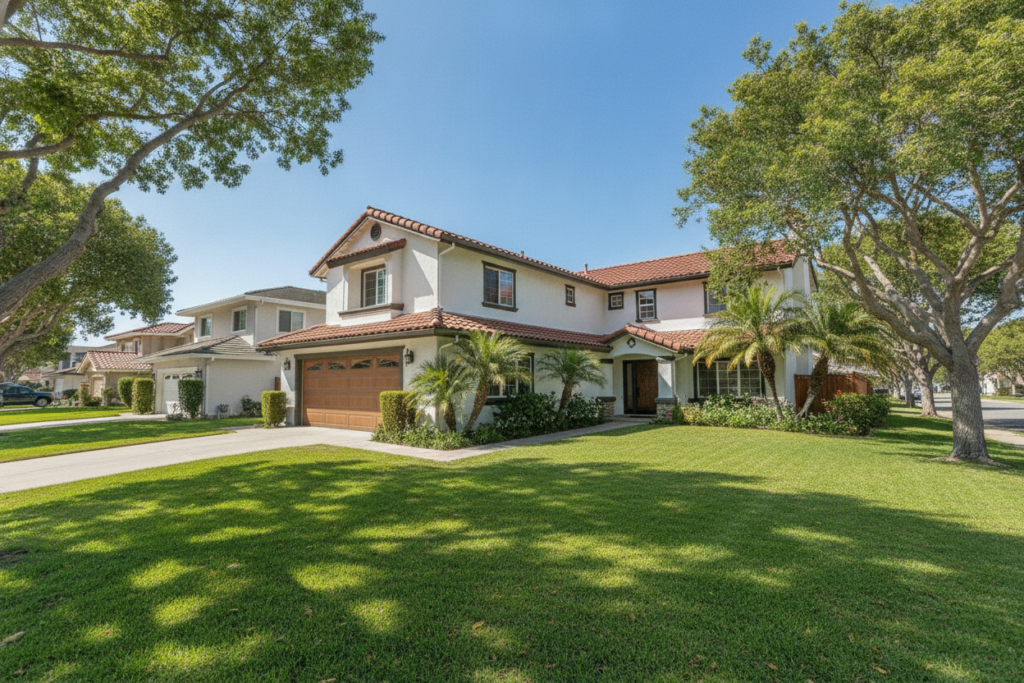
Detached single-family homes in Huntington Beach are a different story. About 87 percent of detached closings in the city carry no HOA, based on CRMLS data through September 30, 2026. If you are buying a detached home, you own the structure and the lot, and all coverage decisions are yours alone.
How to use insurance quotes as a city-selection screen
The practical move is to treat insurance quotes the way you treat mortgage pre-approval: get them early, before you fall in love with a specific address. Ask an independent insurance broker to run homeowners, flood, and earthquake quotes for two or three addresses in each city you are seriously considering.
The numbers will vary more than you expect. A detached home in Huntington Beach carries a detached single-family median of $1,649,500 (226 closed sales, 90 days ending September 30, 2026, CRMLS). A comparable home in Newport Beach carries a median of $4,550,000 (99 closed sales, same window, CRMLS).
The insurance premiums at those price points, and for those specific flood zones and construction types, can differ by thousands of dollars a year.
Dana Point carries a detached single-family median of $2,100,000 (63 closed sales, 90 days ending August 25, 2026, CRMLS). San Clemente sits at $1,999,000 (123 closed sales, same window, CRMLS). Laguna Beach is at $3,500,000 (79 closed sales, same window, CRMLS).
Each city has its own coastal profile, and insurance quotes will reflect that.
Build a simple comparison: for each city, add the estimated annual homeowners premium, flood premium, and earthquake premium, then divide by 12. Add that monthly figure to your PITI estimate. The city that looked most affordable on purchase price alone may not look the same after the full insurance stack.
Document requests during escrow should include the current homeowners policy, any flood insurance policy, and, for condos, the HOA master policy declarations page.
| City | Detached SFR Median | CRMLS Sales (90-day) |
|---|---|---|
| Huntington Beach | $1,649,500 | 226 |
| Seal Beach | $1,750,000 | 27 |
| Dana Point | $2,100,000 | 63 |
| San Clemente | $1,999,000 | 123 |
| Laguna Beach | $3,500,000 | 79 |
| Newport Beach | $4,550,000 | 99 |
What to ask your insurance broker before you make an offer
Start with availability. Ask whether admitted carriers are actively writing policies in the ZIP code you are targeting. If the answer is no or limited, ask what the FAIR Plan plus wrap option would cost and what it would leave uncovered.
Ask about the deductible structure. Coastal policies sometimes carry a separate wind or hurricane deductible expressed as a percentage of the insured value rather than a flat dollar amount. On a $1.5 million home, a two-percent wind deductible is $30,000 out of pocket before the carrier pays anything.
Ask about flood zone designation and whether the lender will require flood insurance. If the property is in a FEMA Special Flood Hazard Area, budget for the flood premium from day one. If it is not, ask whether private flood coverage is still worth carrying given the property’s proximity to the coast or a channel.
Ask about earthquake coverage separately. The California Earthquake Authority offers policies with varying deductible levels. A higher deductible lowers the premium but increases your exposure in a significant event. Run the math on what you could absorb out of pocket before choosing a deductible tier.
Ask about nonrenewal history in the ZIP code. A carrier that has been reducing its coastal book may nonrenew your policy at the first renewal. Knowing that in advance lets you plan, rather than scramble for coverage 60 days before renewal.
Insurance costs and your overall budget: the honest math
Insurance is not a rounding error on a coastal purchase. On a $1.6 million home, a combined homeowners, flood, and earthquake stack can run from roughly $8,000 to $15,000 or more per year depending on the address, construction, flood zone, and carrier availability.
That is $670 to $1,250 per month added to your housing cost.
Property taxes in Orange County run about 1.25 percent of assessed value, which includes the one-percent base rate plus local add-ons. In Mello-Roos communities, the total can be higher. Confirm the specific tax rate for any address with the Orange County Assessor before you close.
If you have questions about how a purchase might affect your tax situation under Proposition 19 or other provisions, confirm the specifics with your CPA or tax advisor.
The insurance stack, the property tax, the HOA fee if one applies, and the mortgage payment together form the real monthly cost of ownership. Buyers who run all four numbers before choosing a coastal city make better decisions than buyers who run only the mortgage payment.
Lenders will require proof of homeowners insurance before funding. Some lenders in coastal markets also require flood insurance regardless of flood zone if the property is within a certain distance of the water. Ask your lender early what their specific requirements are for the cities you are considering.
The goal of this exercise is not to talk you out of a coastal purchase. It is to make sure the city and neighborhood you choose still fits your budget after the full cost of ownership is on the table. That is a better position to be in at the offer stage than at the closing table.
New to coastal Orange County
Get the honest read on Orange County neighborhoods
A 15 minute call on the areas, the tradeoffs, and how to buy here on your timeline, even from out of state.
Schedule my Orange County intro call
Prefer to talk now? Call or text 714-500-7797 · Serving coastal Orange County since 2004
Questions clients ask about insurance before choosing a coastal city
Does my standard homeowners policy cover storm surge or coastal flooding?
Generally, no. California officials state that most homeowners policies do not cover flooding, mudslides, or debris flows. Storm surge is a form of flooding and falls under the same exclusion. To cover coastal flood damage, you need a separate flood insurance policy, either through the National Flood Insurance Program or a private carrier. Do not assume your homeowners policy responds to water that enters from the ground up, regardless of what caused it.
How long does it take for flood insurance to go into effect?
Flood insurance generally has a 30-day waiting period before coverage begins. The main exception is when a lender requires flood insurance as a condition of the loan, in which case the policy can take effect at closing. If you are paying cash or your lender does not require flood coverage, plan to purchase the policy at least 30 days before you want protection to start. Waiting until the week of closing leaves a gap that cannot be closed retroactively.
What is the California FAIR Plan and when would I need it?
The California FAIR Plan is the state’s insurer of last resort for fire coverage. It comes into play when admitted carriers decline to write a standard homeowners policy for a given address, which has happened more frequently in some coastal and wildfire-adjacent ZIP codes. The FAIR Plan provides basic fire coverage only, so most policyholders pair it with a separate wrap or difference-in-conditions policy to cover liability, theft, and other perils. Ask your broker to compare the total cost against any admitted carrier options still available for the address.
If I am buying a condo in a coastal city, what insurance do I actually need?
You need an HO-6 policy, which covers your personal property, interior finishes, and personal liability inside the unit. The HOA master policy covers the building structure and common areas but generally does not cover what is inside your unit. Ask for the master policy declarations page during escrow to confirm whether it is walls-in or bare walls. Also check whether the master policy deductible is large enough to trigger a special assessment against unit owners, and make sure your HO-6 includes loss assessment coverage.
Will my lender require flood insurance even if the home is not in a high-risk flood zone?
It depends on the lender and the property. Federally backed loans generally require flood insurance when a property is in a FEMA Special Flood Hazard Area. Some lenders apply their own overlays and require flood coverage for properties within a certain distance of the coast or a navigable waterway, regardless of the official flood zone designation. Ask your lender directly what their requirements are for the specific city and address you are considering. Do not assume a lower-risk zone designation means no lender requirement.
How do I compare insurance costs across different coastal Orange County cities before I choose one?
Ask an independent insurance broker to run homeowners, flood, and earthquake quotes for representative addresses in each city you are seriously considering. Use those quotes to build a monthly insurance cost for each city, then add it to your estimated mortgage payment, property tax, and any HOA fee. The city that looks most affordable on purchase price alone may look different after the full stack. Running this comparison before choosing a coastal city, rather than during escrow, gives you time to adjust your city choice or your budget without pressure.
What to do right now
Here is what to do right now. Pull the FEMA flood map for any address you are seriously considering and note the flood zone designation. Then contact an independent insurance broker, one who can quote across multiple carriers, and ask for homeowners, flood, and earthquake estimates for two or three addresses in each coastal city on your list. Build a simple spreadsheet: purchase price, estimated mortgage payment, property tax at about 1.25 percent of assessed value, insurance stack, and HOA fee if applicable. That full monthly number is the real comparison. If you want a plain read on how Huntington Beach neighborhoods stack up on price, flood exposure, and property type before you get that far, book a 15-minute intro call at https://gantry.me/TalkToGantry.
The next step
Ready to talk through your Orange County move?
Tell me where you are in the process and I will map out your options, your numbers, and your timing. 15 minutes, zero pressure.
Schedule my free 15 minute call
Prefer to talk now? Call or text 714-500-7797 · Serving coastal Orange County since 2004
Know what Orange County homes are really selling for
One short email each week: new listings, closed sales, and where prices are heading. Free, and easy to leave anytime.
Gantry Wilson · Gantry Wilson Group · Real Brokerage · Huntington Beach, CA · DRE# 01412779
Trusted. Local. Proven.