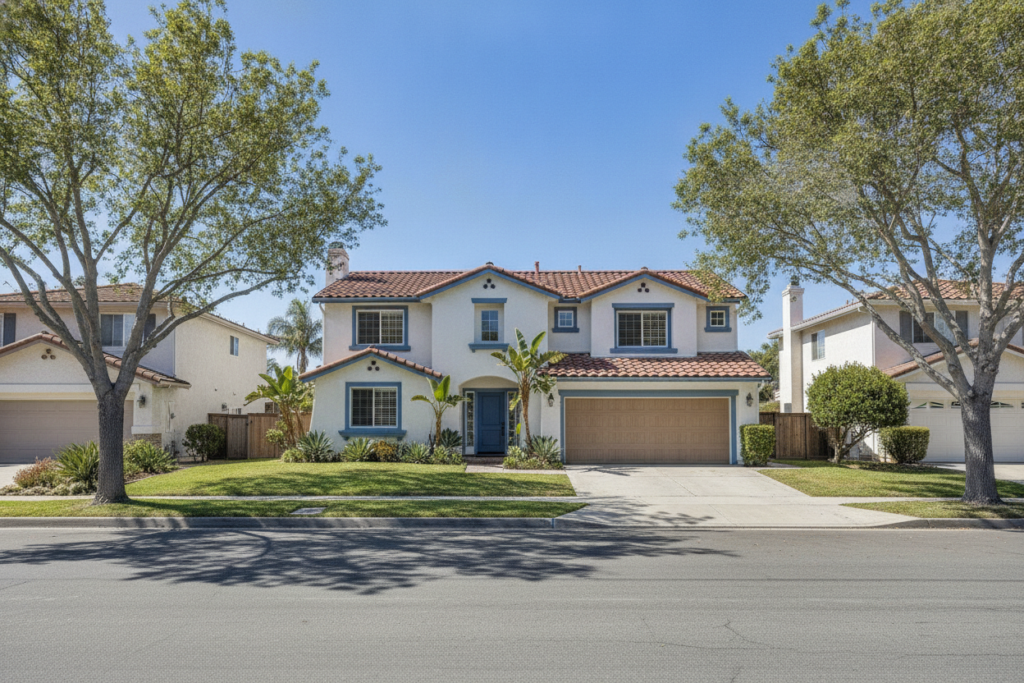

Selling a Huntington Beach Home with a Reverse Mortgage: What the Numbers Really Say
Quick answer
Yes. Selling a Huntington Beach home with a reverse mortgage is allowed at any time. The loan becomes due at closing, and escrow pays the servicer directly. Your net proceeds equal the sale price minus the reverse-mortgage payoff, selling costs, title and escrow fees, property taxes, and any repairs or concessions. The detached single-family median in Huntington Beach is $1,649,500 (226 closed sales, 90 days ending 2026-09-30, CRMLS), so most longtime owners carry substantial equity above their payoff balance.
- You can list and sell at any time; no waiting period exists for an active HECM
- Escrow pays the reverse-mortgage servicer directly from your sale proceeds
- FHA non-recourse rules protect you and your heirs if the balance ever exceeds the sale price
- Request a written payoff statement from your servicer before you accept any offer
Last verified: October 2026 · Sources: HUD: Home Equity Conversion Mortgages, eCFR Title 24 Part 206: HECM Regulations
Selling a Huntington Beach home with a reverse mortgage is one of the most common questions longtime homeowners here ask before they decide to downsize. The short answer is yes, you can sell, and the process is more straightforward than most people expect.
Huntington Beach is a seaside city in Orange County on the Pacific Ocean, and its detached single-family median has reached $1,649,500 as of the 90-day period ending September 30, 2026 (226 closed sales, CRMLS). That means decades of equity are at stake, and getting the math right matters.
Gantry Wilson has served Huntington Beach and Orange County since 2004.
Yes, you can sell your Huntington Beach home while a reverse mortgage is active
A reverse mortgage, specifically an FHA-insured Home Equity Conversion Mortgage, does not prevent a sale. Under HUD program rules, a HECM becomes due and payable when the borrower sells the home. The sale is the normal payoff path, not an exception to it.
You do not need to wait for any maturity date. You do not need lender permission to list. You simply list the home, accept an offer, and let escrow handle the payoff the same way it handles any other lien.
The non-recourse feature of an FHA HECM is important to understand from the start. Federal regulations at 24 CFR Part 206 establish that FHA-insured HECM loans are non-recourse under federal program rules, meaning neither you nor your heirs owe more than the property’s value at the time of sale.
That protection is built into the loan.
Many longtime Huntington Beach homeowners worry that the reverse mortgage complicates a sale or traps their equity. It does neither. The servicer is simply another party in escrow, paid from proceeds before you receive your net check.
The emotional weight of leaving a home you have lived in for decades is real. The mechanics of the transaction, though, are calm and predictable. Knowing that the process is routine can make the decision easier to think through clearly.
How the reverse-mortgage payoff works at closing
Before you accept an offer, contact your reverse-mortgage servicer and request a written payoff statement. This document shows the outstanding loan balance, all accrued interest to a specific date, and the mortgage insurance premium balance. It is the starting point for your net-proceeds math.
Payoff statements are typically valid for 30 days. Because escrow in Huntington Beach closes in about 30 days or less after opening, you want the payoff statement dated to align with your expected closing date. Ask your servicer for a per-diem interest figure so you can adjust if closing shifts by a few days.
Once escrow opens, you provide the payoff statement to the title company. The title officer orders a formal payoff demand directly from the servicer. That demand is binding and supersedes any earlier estimate.
At closing, the title company wires the payoff amount to the servicer from your sale proceeds. The sale payoff must account for the reverse-mortgage balance, accrued interest, and mortgage insurance. The servicer confirms receipt, releases the lien, and the remaining balance flows to you.
The sequence is the same as paying off a conventional mortgage.
One thing to watch: accrued interest on a reverse mortgage compounds over time. If you took out the loan years ago and have not made payments, the balance may be meaningfully higher than the original loan amount. Pull the payoff statement early so the number does not surprise you during negotiations.
The payoff statement covers the loan itself. It does not include your other closing obligations, which are separate line items on the seller net sheet. Those are covered in the next section.
"Attention to detail and super friendly!"
Mike Estrada
Calculating your net proceeds: the full worksheet
The formula is straightforward. Start with your agreed sale price. Subtract the reverse-mortgage payoff balance.
Then subtract each of the following: real estate commission (typically 5 to 6 percent of the sale price), title and escrow fees, prorated property taxes, any HOA dues owed, homeowners insurance adjustments, and any repair credits or seller concessions you agree to in negotiations.
On a Huntington Beach detached single-family home at the current median of $1,649,500, a 5.5 percent commission equals roughly $90,700. Title and escrow fees typically run $3,000 to $5,000 combined, though the exact amount depends on the transaction.
Property taxes are prorated to the day of closing at about 1.25 percent of assessed value annually, higher in Mello-Roos communities.
About 87 percent of detached single-family homes in Huntington Beach carry no HOA, so that line item is zero for most sellers. If your home is in a community with an HOA, any unpaid dues or transfer fees are collected through escrow.
Repair credits and concessions are negotiable. They are not fixed costs. A well-priced home in good condition may require none. A home that needs work may involve a credit to the buyer in lieu of repairs. Either way, the amount is known before you sign the final closing documents.
Your seller net sheet, which you review five to seven days before closing, itemizes every deduction. Nothing should appear on that sheet that was not discussed earlier in the transaction. If a number surprises you, ask your agent to walk through it line by line before you sign anything.
The net-proceeds figure you calculate before listing is an estimate. The seller net sheet at closing is the real number. The gap between the two is usually small if you started with an accurate payoff statement and a realistic sale price.
What if the payoff exceeds the sale price? FHA non-recourse protection
This situation is uncommon in Huntington Beach given current values, but it is worth understanding. If your reverse-mortgage balance has grown to exceed what the home will sell for, FHA non-recourse rules protect you and your heirs from the difference.
Under 24 CFR Part 206, a HECM borrower or estate can satisfy the loan by selling the home for at least 95 percent of its current appraised value. The FHA mortgage insurance fund covers any remaining shortfall.
The lender cannot pursue you, your estate, or your heirs for additional payment.
In practical terms, this means the worst outcome is that you walk away from the sale with no proceeds, not with a debt. That is a meaningful protection, especially for homeowners who took out a large reverse mortgage many years ago.
The 95 percent rule applies when the loan balance exceeds the home’s appraised value. If the sale price is above the payoff balance, the non-recourse feature is not triggered and you simply receive the difference as net proceeds.
For most Huntington Beach homeowners who have owned for decades, the home’s current value is well above any reverse-mortgage balance. The detached single-family median here is $1,649,500 (226 closed sales, 90 days ending 2026-09-30, CRMLS), and values have risen substantially over the past 20 years.
The non-recourse protection is a safety net, not a likely outcome.
"Gantry put us first, letting us lead the house hunting journey. Great knowledge of the industry’s ins and outs. His word is gold"
Shawn Ferguson
Selling a Huntington Beach home in Orange County’s current market
Huntington Beach is a city of about 200,000 people in northwestern Orange County on the Pacific Ocean. Sunset Beach, annexed by the city in 2011, and Huntington Harbour, in the northwest corner of the city, are both within Huntington Beach city limits.
Market conditions vary across these neighborhoods, but escrow length does not.
Orange County had about 5,046 active listings in mid-August 2026. Huntington Beach detached homes had a median of 19 days on market over the 90-day period ending September 30, 2026 (CRMLS). Homes here sold at 98.5 percent of original list price on average.
Huntington Harbour waterfront homes carry a 12-month median of about $4,000,000 (39 closed sales, CRMLS), while interior Harbour homes without dock or water-view access sit at $2,070,000 (27 closed sales, CRMLS). Sunset Beach has a 36-month median of $3,600,000 on 19 sales (CRMLS).
Pricing varies significantly by location within the city.
If you are considering a move to a nearby city, Fountain Valley’s detached single-family median is $1,510,000 (60 closed sales, 90 days ending 2026-08-25, CRMLS), and Westminster’s is $1,200,000 (55 closed sales, same period, CRMLS). Both are close enough to Huntington Beach to keep familiar routines intact.
Escrow closes in about 30 days or less after opening, regardless of neighborhood. The reverse-mortgage payoff does not extend that timeline. The servicer provides a payoff demand to the title company as a routine step, and the process moves at the same pace as any other sale.
Pricing your home accurately from the start matters more than timing the market. Homes that sold at or above list price in Huntington Beach were priced to reflect actual comparable sales, not aspirational numbers. A free home value review before you list gives you a real baseline to work from.
Tax, benefit, and relocation planning before you list
The net proceeds from selling a Huntington Beach home with a reverse mortgage can be a large sum. Before you accept an offer, it is worth understanding how that money may affect your tax situation and any benefits you currently receive. This is not an area to figure out after closing.
Capital gains, Proposition 19 property tax transfer rules, and potential impacts on means-tested programs like Medi-Cal all depend on your specific circumstances. Confirm the details with your CPA or tax advisor before you list, not after you sign.
A brief conversation with a professional now can prevent a costly surprise later.
If you receive Medi-Cal, SSI, or other income- or asset-tested benefits, a large cash receipt from a home sale may affect your eligibility. A benefits counselor can help you understand the timing and structure of how proceeds are received and held. This is separate from tax planning and requires its own conversation.
Relocation costs are real and often underestimated. Moving expenses, temporary housing if the timing between your sale and your next home does not align perfectly, and any deposits or purchase costs for a replacement property all come from the same pool of net proceeds.
Build those into your estimate before you decide on a list price floor.
If you are thinking about using proceeds to purchase a replacement home, the supplemental property tax rules in Orange County are worth reading before you close. They affect your first-year costs in a new home and are easy to overlook in the planning stage.
The goal is to arrive at closing with no surprises. That means having your payoff statement, your tax conversation, your benefits review, and your relocation budget all in place before you accept an offer.
A five-step action plan for the next six months
The process of selling a Huntington Beach home with a reverse mortgage follows a clear sequence. Here is the order that keeps things calm and on track for a closing within the next six months.
Step one: call your reverse-mortgage servicer and request a written payoff statement valid through your expected closing date. Ask for the per-diem interest figure. This one document anchors everything else in your net-proceeds math.
Step two: get a free home value review so you know what the home will realistically sell for before you commit to a list price. The gap between your payoff balance and your likely sale price is your equity. Knowing that number early shapes every other decision.
Step three: list the home, accept an offer, and open escrow. Provide the payoff statement to the title company at the start of escrow. The title officer will order a formal payoff demand from the servicer, handled as a routine lien payoff.
Step four: review your seller net sheet five to seven days before closing. Every deduction should be itemized and match what was discussed earlier. If anything looks unfamiliar, ask for a line-by-line explanation before you sign.
Step five: close, receive your net proceeds, and move forward. The reverse mortgage is paid, the lien is released, and the equity you built over decades is yours to use as you choose.
Frequently asked questions about reverse mortgages and Huntington Beach home sales
The questions below come up consistently when longtime homeowners are working through this decision. Each answer is written to stand on its own.
For longtime Huntington Beach homeowners
What is your Huntington Beach home actually worth today?
Get a data-backed home value review from a broker who has sold here since 2004. Not an online estimate, no pressure, and no obligation.
Prefer to talk now? Call or text 714-500-7797 · Serving coastal Orange County since 2004
Questions clients ask about selling a Huntington Beach home with a reverse mortgage
Do I have to wait for my reverse mortgage to mature before I can sell?
No. You can sell your Huntington Beach home at any time while a reverse mortgage is active. The loan becomes due when you sell, and the sale proceeds pay it off through escrow. There is no waiting period and no lender permission required to list. The sale itself is the standard payoff event under HUD program rules. You can list today, accept an offer, and close in about 30 days or less.
What is a payoff statement, and why do I need one before I list?
A payoff statement is a written document from your reverse-mortgage servicer showing exactly how much you owe on a specific date. It includes the outstanding loan balance, all accrued interest, and the mortgage insurance premium balance. You need it before you list because it tells you what will be deducted from your sale price before you receive any proceeds. Request one early, note the per-diem interest figure, and confirm the valid-through date aligns with your expected closing.
What happens if my reverse-mortgage balance is higher than my home’s sale price?
An FHA-insured HECM is non-recourse, which means you and your heirs are protected from owing the difference. Under federal regulations at 24 CFR Part 206, you can satisfy the loan by selling the home for at least 95 percent of its current appraised value. The FHA mortgage insurance fund covers any remaining shortfall. The lender cannot pursue you or your estate for additional payment. The worst outcome is walking away with no proceeds, not with a debt.
How long does escrow take in Huntington Beach, and does the reverse mortgage slow it down?
Escrow in Huntington Beach closes in about 30 days or less after opening. That timeline applies across all neighborhoods, including Sunset Beach and Huntington Harbour, both of which are within Huntington Beach city limits. The reverse mortgage does not slow down escrow. The servicer provides a payoff demand to the title company as a routine step in the closing process. The lien is paid and released at closing the same way any other mortgage lien would be.
Will selling my Huntington Beach home affect my Medicare, Medi-Cal, or other benefits?
Possibly. The net proceeds from your sale may count as income or assets and could affect means-tested programs including Medi-Cal, SSI, and others. The impact depends on the amount, how and when it is received, and the specific rules of each program. Before you list, consult a tax professional and a benefits counselor to understand what applies to your situation. This conversation should happen before you accept an offer, not after closing, when options are limited.
What costs come out of my sale proceeds besides the reverse-mortgage payoff?
Several items are deducted before you receive your net proceeds. Real estate commission typically runs 5 to 6 percent of the sale price. Title and escrow fees generally total $3,000 to $5,000, depending on the transaction. Property taxes are prorated to the day of closing at about 1.25 percent of assessed value annually. HOA dues and transfer fees apply if your home has an HOA, though about 87 percent of Huntington Beach detached single-family homes do not. Any repair credits or seller concessions you agree to are also deducted. Every item appears on your seller net sheet before closing.
What to do right now
The decision to sell a longtime Huntington Beach home is not a small one. The mechanics, though, are manageable when you know the sequence. Start with a written payoff statement from your servicer. Get a realistic home value review so you know your equity before you commit to anything. Talk to your CPA and a benefits counselor before you accept an offer. Then let escrow handle the payoff the way it handles every other lien. Gantry Wilson has been serving Huntington Beach and Orange County since 2004. If you want the real number for your home before you decide anything, get a free home value review at https://search.viewochouses.com/seller or call or text Gantry at 714-500-7797. Want this kind of read on your part of the market every week? Get the weekly Market Update here: https://blog.viewochouses.com/market-update/
The next step
Ready to talk through your Huntington Beach move?
Tell me where you are in the process and I will map out your options, your numbers, and your timing. 15 minutes, zero pressure.
Schedule my free 15 minute call
Prefer to talk now? Call or text 714-500-7797 · Serving coastal Orange County since 2004
Know what Huntington Beach homes are really selling for
One short email each week: new listings, closed sales, and where prices are heading. Free, and easy to leave anytime.
Gantry Wilson · Gantry Wilson Group · Real Brokerage · Huntington Beach, CA · DRE# 01412779
Trusted. Local. Proven.