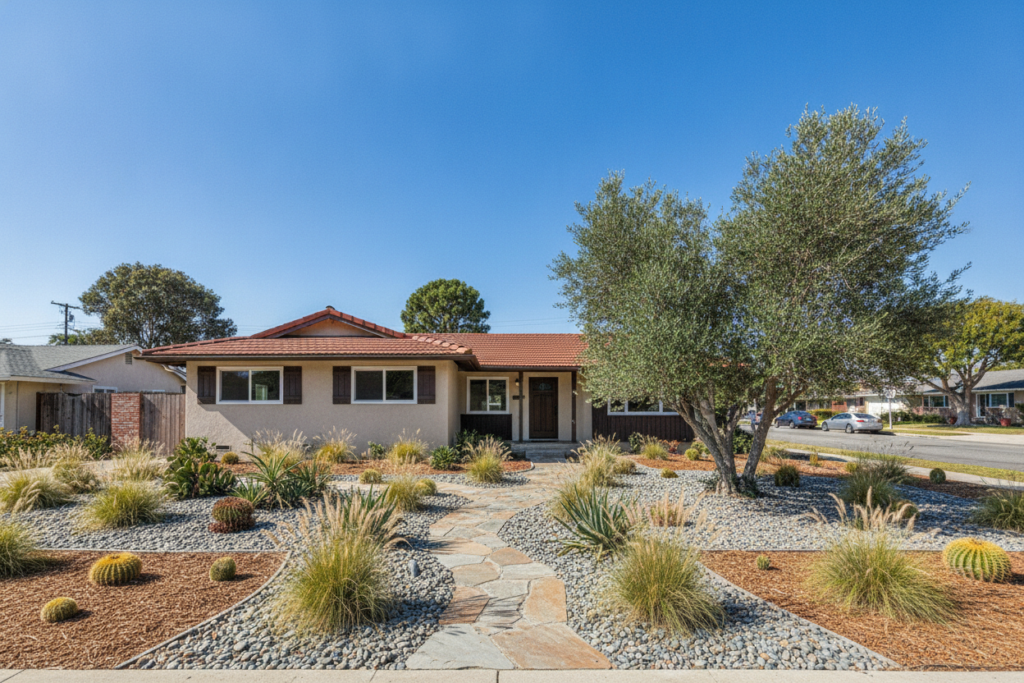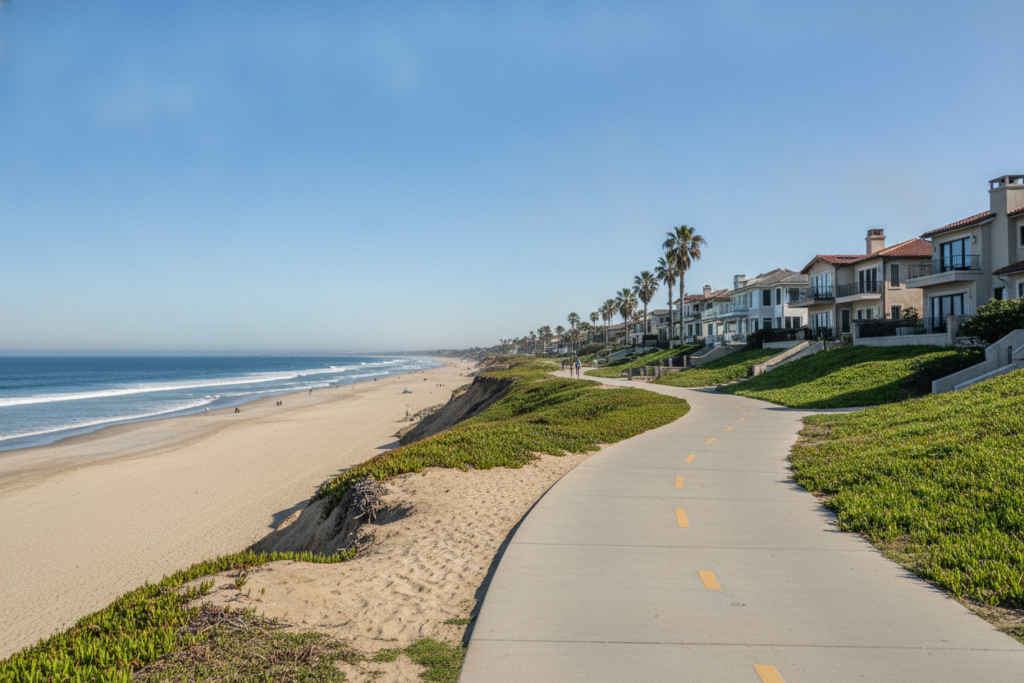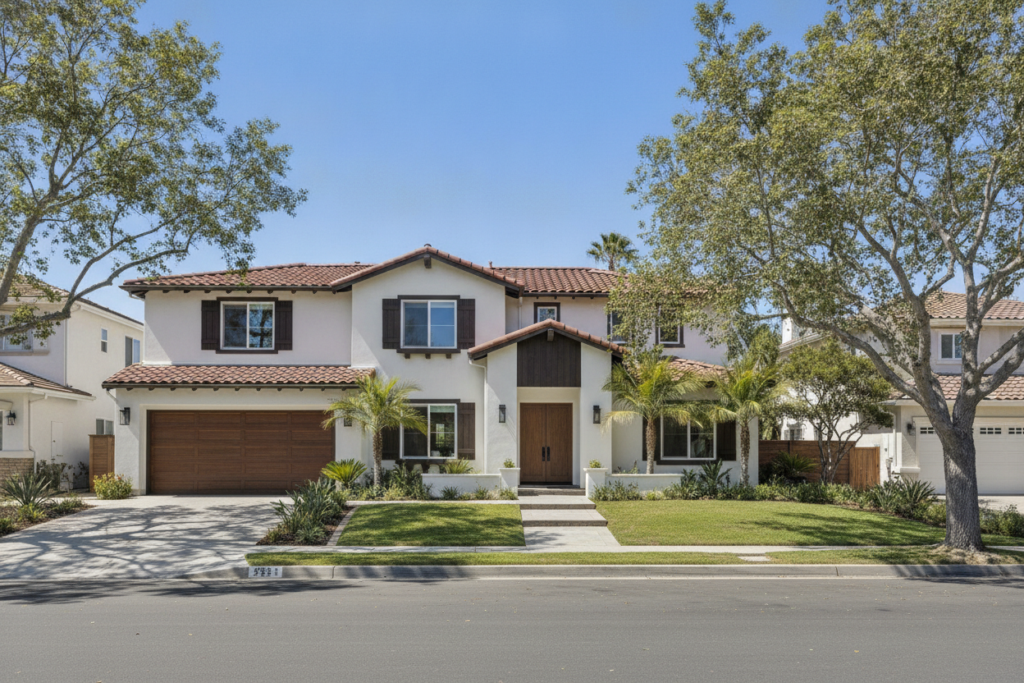
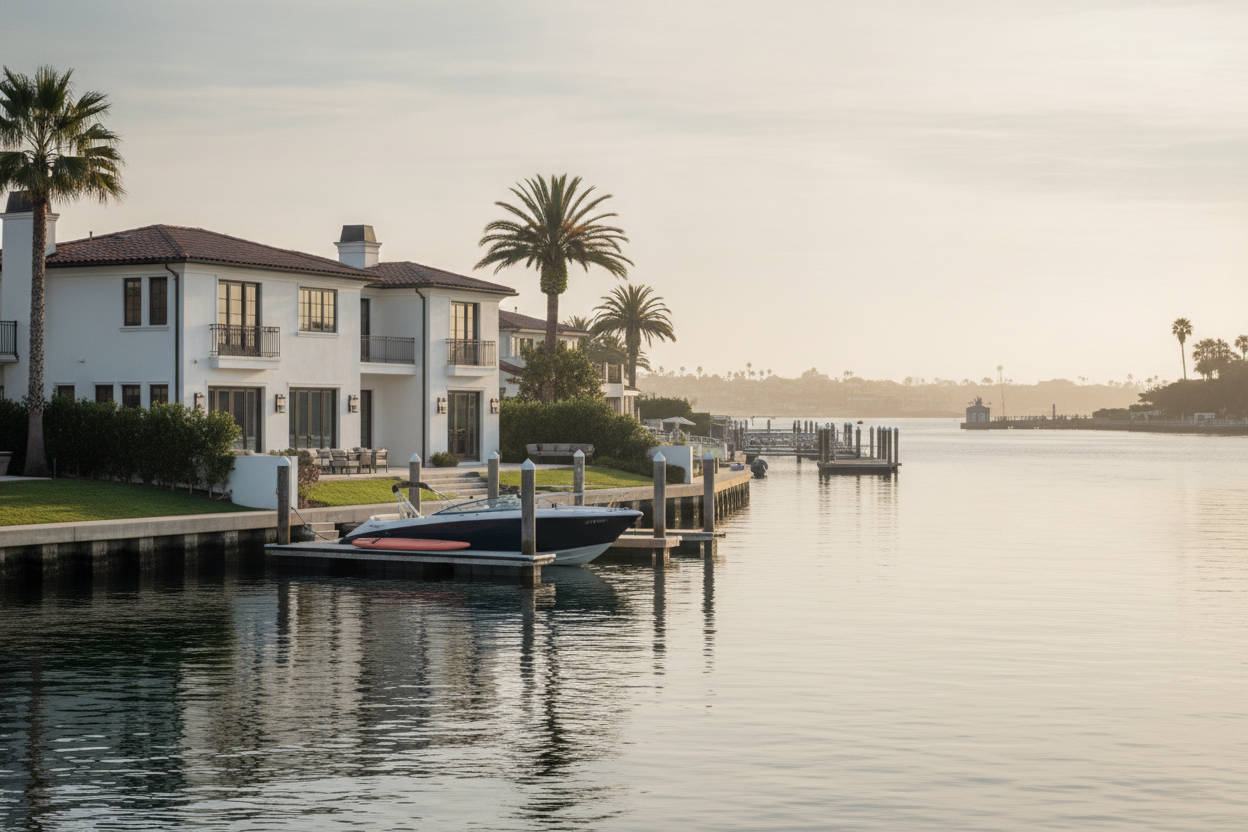
Pricing a Coastal Home Huntington Beach: Avoid Costly Mistakes
Quick answer
Pricing a coastal home Huntington Beach starts with micro-market comps from the last 30 to 90 days, not citywide averages. Coastal neighborhoods trade at $800 to $1,100+ per square foot versus $751 to $803 citywide. Build a defensible range using recent closed sales, pending deals, and active competition in your specific waterfront or beach-close pocket. Then test quietly with a price range rather than a single number, monitor buyer feedback, and adjust within 30 to 45 days if needed.
- Coastal Huntington Beach micro-markets command 6 to 40 percent premiums over inland pockets; use neighborhood-level comps, not citywide medians.
- Recent closed and pending sales from the last 30 to 90 days are your core pricing inputs when turnover is thin.
- A quiet test with a price range lets you gauge buyer appetite without committing to a single list price.
- Escrow closes in about 30 days or less after opening, so a 30 to 45 day quiet-test window is realistic before a full market launch.
Last verified: July 2026 · Sources: ViewOCHouses: Price Huntington Beach Home
Pricing a coastal home Huntington Beach is not a spreadsheet exercise when you own a truly unique waterfront or ocean-close property. Traditional comp analysis assumes a market with steady turnover and similar homes. You don’t have that.
We’ve served Huntington Beach and Orange County since 2004, and we know that coastal micro-markets trade on their own logic. This guide shows you how to build a defensible price range using the data you actually have, test the market quietly, and make a confident decision within 30 to 45 days.
Why citywide pricing fails for coastal homes
Huntington Beach median prices and price-per-square-foot figures hide enormous local variation. Citywide single-family homes trade around $751 to $803 per square foot, but coastal neighborhoods sit at $800 to $1,100+ per square foot. That gap is not noise.
It reflects buyer demand for beach proximity, ocean views, and walkability.
When you’re pricing a coastal home Huntington Beach, a citywide average tells you almost nothing. Your buyer is not comparing your home to an inland pocket three miles away. They’re comparing it to other ocean-close or waterfront homes in your specific neighborhood or micro-market. That’s where your comps live.
The problem gets worse when your home is truly one-of-a-kind. Maybe it’s a Huntington Harbour waterfront property with a private boat dock. Maybe it’s a beach-close single-family with an ocean view and a rare floor plan. You may have zero or one comp that actually matches.
That’s when most sellers panic and either overprice or underprice significantly. Getting the process right for pricing a coastal home Huntington Beach means resisting that panic and building a methodical case instead.
Build your micro-market comp set
Start by defining your micro-market. Huntington Harbour is a distinct waterfront pocket in northwest Huntington Beach with channels that open to the ocean through Anaheim Bay. If you own there, your comps are other Huntington Harbour homes, not the broader city.
If you’re ocean-close near the pier, your comps are homes within a few blocks of the beach, not inland tracts.
Pull recent closed sales from the last 30 to 90 days in your micro-market. If you have three or four solid comps, you have a range. If you have one or two, add pending sales and active listings to the picture. Pending deals show what buyers are willing to pay right now.
Active listings show what competition exists at different price points.
For pricing a coastal home Huntington Beach, ignore homes that sold more than 90 days ago unless they’re the only reference point. Market conditions shift fast in luxury coastal pockets. A $4.2M sale from six months ago may not reflect today’s buyer appetite. Stick to the last quarter.
When you’re working with thin data, every recent data point matters more, so treat each pending sale and active listing as a signal worth examining carefully.
"Gantry was so professional and helpful in dealing with an out of the country client. I live in Canada and so lucky to have found him. He helped me with everything I needed. I can’t say enough, with his ethics and experience things went so smoothly. Highly recommended!"
Hon P
Account for property-specific scarcity
Your home is not a comp. It’s the subject. Your comps may be newer, larger, or have better views. That’s where judgment comes in. If your home is 3,200 square feet and your closest comp is 3,500 square feet and sold for $4.1M, you don’t just divide by square footage.
You ask: what did the extra 300 square feet actually add? What did the view difference cost? What did the lot size difference matter?
Waterfront and ocean-close homes command premiums that don’t scale linearly. A home with a private boat dock is not worth 10 percent more than a home without one. It may be worth 15 to 25 percent more, depending on the market and the buyer pool.
A home with an unobstructed ocean view may command 20 to 40 percent more than a home with a partial or no view. These are not formulas. They’re anchors for your thinking.
When pricing a coastal home Huntington Beach, ask yourself: what would a buyer pay extra for in my home that my comps don’t have? What would they pay less for? Write it down. This becomes your adjustment narrative when you talk to buyers or test the market quietly.
Scarcity is real in coastal Orange County, and articulating it clearly is part of building a defensible price.
The quiet-test strategy for pricing a coastal home Huntington Beach
Instead of listing at a single price, consider a quiet test with a price range. Tell a handful of qualified buyers or agents that you’re exploring the market for a $4.0M to $4.3M property. This tells the market you’re serious without committing to a specific number.
It also gives you 30 to 45 days to gather feedback before you decide on a full listing.
A price range works because it signals confidence and flexibility. Buyers know you’ve done your homework. They also know you’re open to the right offer. In a thin market with few comps, this approach often surfaces buyer interest faster than a single list price, which can feel arbitrary or defensive.
During your quiet test, pay attention to which price point generates the most serious inquiries. If you’re getting calls at $4.0M but silence at $4.3M, the market is telling you something. If you’re getting multiple inquiries at $4.2M, that’s your signal. This is not guesswork. It’s real buyer feedback.
Use it to set your list price when you go public. Pricing a coastal home Huntington Beach this way protects your reputation and your negotiating position.
"My friend recommended Gantry Wilson to sell my house. At the first interview I really was confident that he was the right person. He knew my situation and was very professional and understanding. I really like his whole team. I would really recommend Gantry Wilson if anyone is thinking of selling their house. My house was sold really fast. I also like his assistant and the escrow officer. I only have good things to say about Gantry Wilson and his team. Thank you for helping me."
Jain Thomas
Monitor active competition and days on market
While you’re testing the market quietly, track active listings in your micro-market. How many homes are listed at $4M or above in your specific neighborhood right now? If there are five, you have real competition. If there’s one, you have an advantage.
Scarcity is a pricing tool, and understanding it is central to pricing a coastal home Huntington Beach at the right level.
Days on market varies by neighborhood and price point. A $4M+ coastal home may sit for 60 to 90 days if it’s overpriced or if buyer interest is weak. It may sell in 20 to 30 days if it’s priced right and marketed well. Use active listings and their age as a reality check.
If a comparable home has been on market for 120 days, ask why. If it’s priced too high, don’t follow it down. If it’s a legitimate issue with the property, learn from it.
Escrow in Huntington Beach typically closes in about 30 days or less after opening, even though days on market varies by neighborhood. This means your quiet-test window is realistic. You can test for 30 to 45 days, adjust your price, and still close in a reasonable timeframe once an offer comes in.
When to use an appraisal and when to look past it
An appraisal is a floor, not a ceiling. If your home appraises at $3.8M but your micro-market comps suggest $4.1M, the appraisal is telling you the appraiser was conservative or didn’t understand the waterfront premium. This happens often with one-of-a-kind coastal homes. Appraisers use formulas.
Your home doesn’t fit the formula.
For pricing a coastal home Huntington Beach, use an appraisal as a sanity check, not a price anchor. If an appraisal comes in significantly lower than your comp analysis, ask the appraiser to explain their reasoning. Did they miss a recent comparable sale? Did they undervalue the waterfront or ocean-view premium?
Sometimes you’ll find an error. Sometimes you’ll find a legitimate concern about the property.
If you’re selling without a buyer contingency, an appraisal is less relevant. Your buyer will either accept your price or they won’t. If you’re selling with a contingency, an appraisal gap can kill a deal. Price defensibly from the start so you don’t create an appraisal problem later.
Any transaction involving capital gains or 1031 exchange considerations should be confirmed with your CPA or tax advisor before you finalize your strategy.
Presentation and narrative matter as much as price
A one-of-a-kind coastal home needs a narrative that justifies its price. Don’t just list the square footage and lot size. Tell the story of the property. Is it a Huntington Harbour waterfront with a private boat dock and direct ocean access? Say that.
Is it a beach-close home with an unobstructed ocean view and a rare floor plan? Lead with that. Is it a legacy property with original character and a location that can’t be replicated? Own that.
Your presentation is part of your pricing strategy when pricing a coastal home Huntington Beach. Professional photography, a clear narrative, and honest disclosure of any issues all support your price. A buyer who understands why your home is special will pay more for it.
A buyer who sees only square footage and price per square foot will shop based on value metrics alone.
During your quiet test, pay attention to buyer feedback about the narrative. If buyers love the waterfront access but are skeptical about the interior condition, you know what to emphasize or address. If buyers are excited about the location but concerned about the lot size, you know what to clarify in your marketing.
Use feedback to refine both your price and your story before going public.
Make your decision and move forward with confidence
After 30 to 45 days of quiet testing, you’ll have enough data to make a confident pricing decision. You’ll know what your micro-market comps suggest, what active competition looks like, what buyer feedback tells you, and what your property’s unique features are worth.
That’s more than most sellers ever gather before going to market.
Set your list price based on this data, not on emotion or a number you’ve had in your head for years. If the market is telling you $4.0M instead of $4.3M, listen. If the market is telling you $4.2M, that’s your number.
A price that’s defensible from day one will attract serious buyers and close faster than a price that requires negotiation or justification. Pricing a coastal home Huntington Beach with discipline means trusting the data over the wishful number.
Once you list, commit to your price for at least 14 to 21 days. Don’t adjust after one week of silence. Give the market time to work. If you’re still getting no serious interest after 30 days, then adjust. Most homes priced correctly in a micro-market with real comps will generate offers within 30 to 60 days.
Coastal Orange County buyers at this price point move deliberately, but they do move when the value is clear.
Questions clients ask about pricing a coastal home Huntington Beach
Should I list high and negotiate down, or start at a defensible price?
Start at a defensible price. Listing high and negotiating down signals weakness in a thin market. Buyers in the $4M+ coastal segment are sophisticated. They know when a price is inflated. A defensible price based on micro-market comps attracts serious offers faster. You can negotiate from a strong position when the price is grounded in data. You can’t recover credibility after a visible price drop.
How much premium does Huntington Harbour waterfront actually justify?
Waterfront in Huntington Harbour commands a significant premium because supply is fixed. A home with a private boat dock and direct ocean access may be worth 15 to 25 percent more than a comparable non-waterfront home. The right number depends on your specific comps. Pricing a coastal home Huntington Beach means anchoring that premium to recent local sales, not industry rules of thumb.
What if I have only one or two true comps for my property?
Add pending sales and active listings to your comp set. Pending sales show what buyers are paying right now. Active listings show what competition exists at different price points. If you have one comp at $4.1M and one active listing at $4.3M, you have a working range. Use property-specific adjustments to narrow it, then test the market quietly with a price range to gather real buyer feedback before committing.
How do I know if low inventory is helping me or just masking weak buyer interest?
Test the market quietly. If you’re getting multiple serious inquiries at your price range within 30 days, inventory scarcity is working in your favor. If you’re getting silence, weak buyer interest is the real issue. Low inventory doesn’t help if no one wants to buy at your price. Quiet testing reveals the truth faster than a full public listing and protects your reputation in the process.
When should I use a price range instead of a single list price?
Use a price range when testing the market quietly or when your comps genuinely span a wide range. A range signals confidence and flexibility, and it gives you 30 to 45 days to gather buyer feedback before committing to a single number. Once you list publicly, a single price is cleaner. During your quiet test, a range is a powerful tool for pricing a coastal home Huntington Beach without overexposing the listing.
Do most Huntington Beach coastal homes have HOA fees to factor into pricing?
Only about 10 percent of Huntington Beach homes carry an HOA, mostly condos and townhomes. Most single-family coastal and waterfront homes do not have one. If your property does have an HOA, disclose the monthly fee clearly. Buyers at the $4M+ level will factor it in. If your home has no HOA, that’s worth noting as a positive in your narrative.
What to do right now
You have the data now. Pull your micro-market comps from the last 30 to 90 days. List your property-specific advantages and disadvantages. Run a quiet test with a price range for 30 to 45 days. Listen to buyer feedback. Then set a defensible list price and commit to it. This approach takes discipline, but it works. You’ll attract serious buyers, avoid sitting on market too long, and close at a price that reflects your home’s true value. Ready to test the market? Reach out for a private conversation about your specific situation.
Private consultation
A discreet conversation about your coastal property
Direct with Gantry. No mailing lists, no pressure, and complete discretion.
Request a private consultation
Prefer to talk now? Call or text 714-500-7797 · Serving coastal Orange County since 2004
Gantry Wilson · Gantry Wilson Group · Real Brokerage · Huntington Beach, CA · DRE# 01412779
Trusted. Local. Proven.