Huntington Harbour Condo as Second Home: Avoid Costly Mistakes
Quick answer
A Huntington Harbour condo as second home typically costs $630,000 to $800,000 or more in purchase price, plus $400 to $800 monthly HOA dues, property taxes around 0.76 percent of value, and HO-6 insurance $1,200 to $2,000 yearly. Model your total carrying cost against potential rental income, vacancy rates, and your personal use days. If you cannot rent it enough to offset costs, make sure you can comfortably carry it as a pure lifestyle asset for at least five to seven years.
- Huntington Harbour condos average $787,594 in sale price; median is $722,500 as of June 2026.
- HOA dues are a fixed cost; budget $400 to $800 monthly plus potential special assessments.
- Waterfront location means higher insurance; HO-6 policies run $1,200 to $2,000 per year.
- Rental restrictions vary by HOA; confirm short-term vacation rules before you buy.
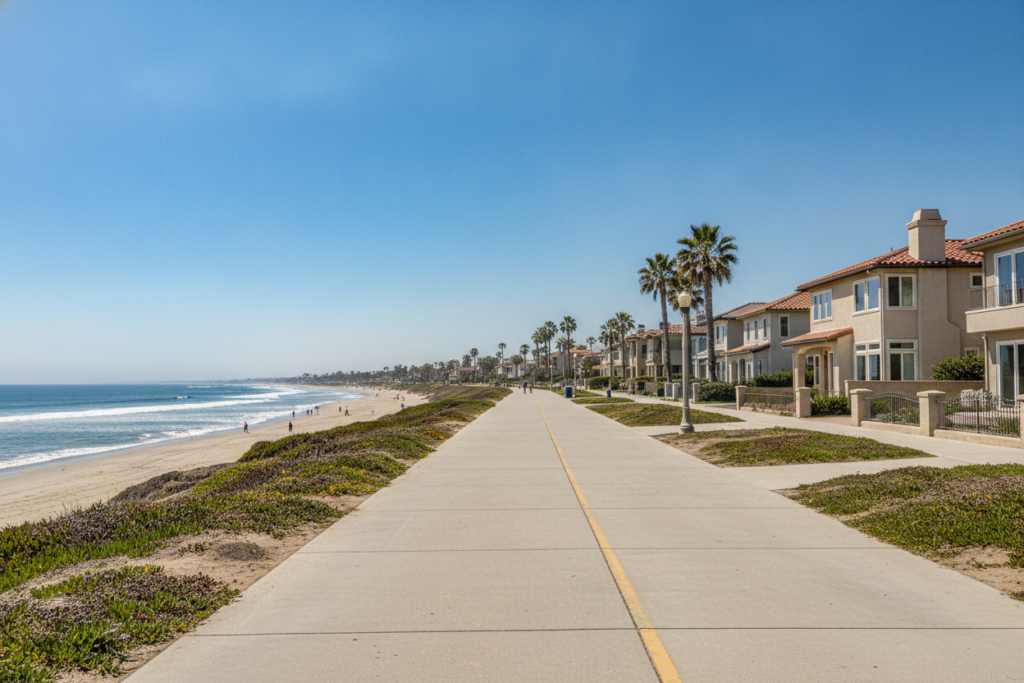
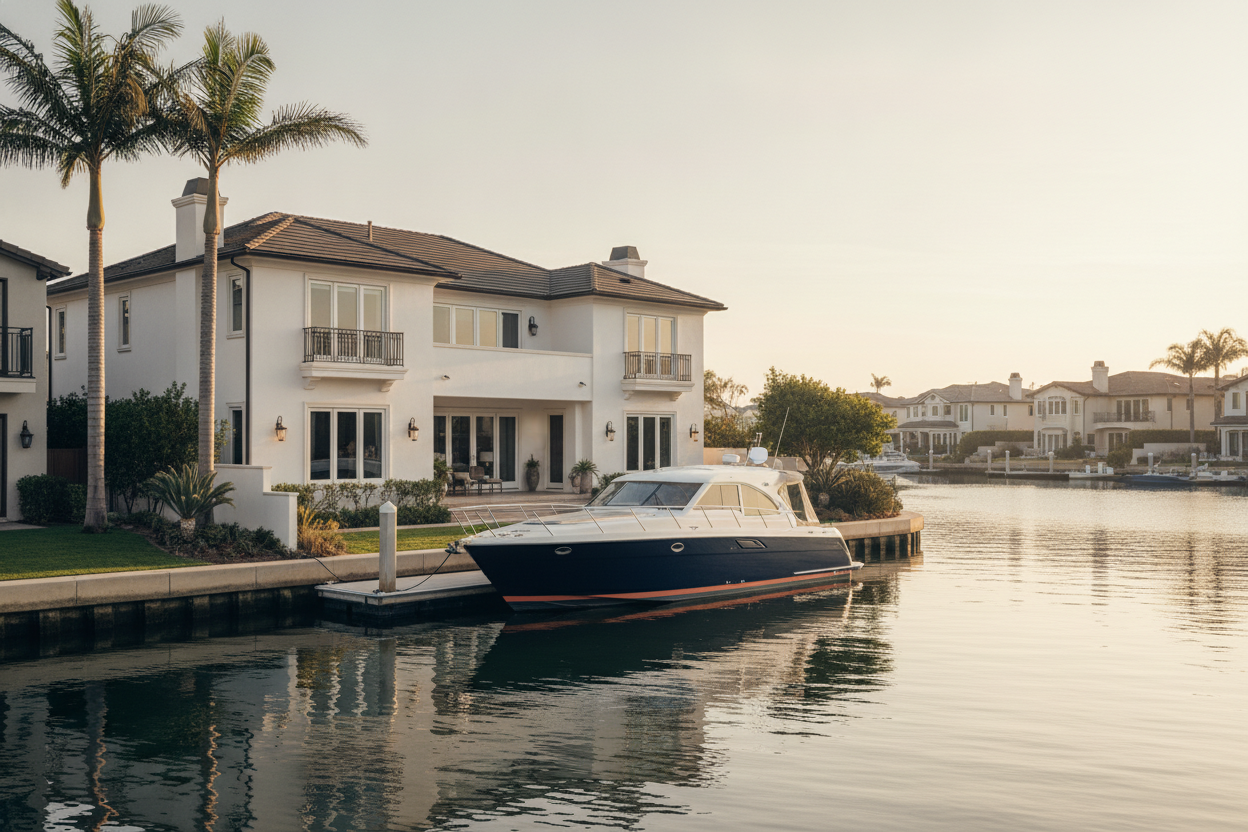
A Huntington Harbour condo as second home sounds perfect: waterfront access, a place to escape, and maybe even rental income. But the math matters more than the view.
We have served Huntington Beach and Orange County since 2004, and we have seen plenty of buyers fall in love with the location and then regret the carrying costs. Here is how to run the real numbers and decide whether this purchase makes sense for you.
The true cost of owning a Huntington Harbour condo as second home
Start with purchase price.
A Huntington Harbour condo as second home in Huntington Beach ranges from around $630,000 to well over $1 million, depending on size, view, and waterfront access. The June 2026 market report shows average condo sale price at $787,594 and median at $722,500.
That is your anchor number.
Now add the costs that do not show up in the listing. HOA dues in Huntington Harbour typically run $400 to $800 per month. About 10 percent of Huntington Beach homes have an HOA, and they are mostly condos and townhomes.
That works out to $4,800 to $9,600 yearly, covering common area maintenance, landscaping, and sometimes building insurance.
Property tax in California is roughly 0.76 percent of assessed value per year. On a $750,000 purchase, expect around $5,700 annually. Insurance for a waterfront condo (HO-6 policy) runs $1,200 to $2,000 per year, higher than inland units because of flood and water damage exposure.
Add a mortgage payment, and your monthly carrying cost climbs fast.
Closing costs, reserves, and the hidden budget line
Buying a Huntington Harbour condo as second home means closing costs of 2 to 3 percent of purchase price.
On a $750,000 condo, that is $15,000 to $22,500 in title, escrow, inspections, and lender fees. Huntington Beach typically closes escrow in about 30 days or less after opening, so the timeline moves quickly and you need cash ready from day one.
Set aside a reserve fund for capital expenditures. Roofs, HVAC systems, and waterfront structures fail. Many HOAs require owners to contribute to a reserve study. Budget an extra $100 to $200 per month into a sinking fund for major repairs you will face in year five or beyond.
If you plan to rent the unit, factor in vacancy. Even in a desirable coastal location, assume 20 to 30 percent vacancy on short-term rentals. That means if you could rent for $3,000 per month, plan on collecting only $2,100 to $2,400 on average.
Longer-term rentals of six months or more carry lower vacancy but also lower nightly rates.
"Gantry put us first, letting us lead the house hunting journey. Great knowledge of the industry’s ins and outs. His word is gold"
Shawn Ferguson
Rental income and HOA restrictions on a Huntington Harbour condo
Before you count on rental income, read the HOA CC&Rs (Covenants, Conditions, and Restrictions). Many Huntington Harbour communities limit short-term rentals or require owner approval. Some ban vacation rentals entirely.
The property you are considering as a Huntington Harbour condo second home may not be rentable at all, or only under a 30-day minimum.
If rentals are allowed, model conservatively. A one-bedroom or two-bedroom waterfront condo might rent for $2,500 to $4,500 per month in peak season, but off-season rates drop 30 to 50 percent.
Property management takes 8 to 12 percent of gross rent, and cleaning, maintenance, and turnover costs eat another 15 to 25 percent.
The real question is whether you can afford the condo if you never rent it. If the answer is no, you are betting on rental income to justify the purchase. That is a business, not a second home. Be honest about your tolerance for tenant turnover, damage claims, and the time required to manage it all.
The cash flow worksheet: what numbers make sense
Build a simple annual model. List your total carrying costs: mortgage principal and interest, property tax, insurance, HOA dues, reserves, and maintenance. For a $750,000 condo with 20 percent down at 6.5 percent interest over 30 years, your mortgage is roughly $3,900 per month.
Add $475 in taxes, $125 in insurance, $600 in HOA, and $150 in reserves. That totals $5,250 monthly, or $63,000 per year.
Now factor in rental income if you plan to rent. Collecting $2,400 per month after vacancy and management fees yields $28,800 yearly. Subtract that from your carrying cost: $63,000 minus $28,800 equals $34,200 out of pocket annually. Can you write that check comfortably for five to seven years?
Buyers who treat a Huntington Harbour condo as second home purely for lifestyle often find the out-of-pocket number acceptable once they stop comparing it to an investment return. That is a valid choice. Just own it consciously rather than hoping the rental math will eventually work out.
"I am grateful for everything Gantry did for me in the sale of my house. He walked me through the process and helped me get top dollar. He was very quick to respond every time I had an issue or question. I appreciate his knowledge and professionalism. I would definitely recommend Gantry to anyone who is buying or selling a home."
Steven French
Appreciation, equity, and the long-term hold question
Do not count on appreciation to save the deal. Coastal Orange County has appreciated historically, but past performance does not guarantee future results. If you purchase a Huntington Harbour condo as second home and it stays flat for five years, you have still paid all those carrying costs.
Appreciation is a bonus, not a plan.
What matters is equity buildup through mortgage paydown and your ability to hold without financial stress. If you are paying $34,000 yearly out of pocket and losing sleep, the property is not worth it.
If you can absorb that cost and genuinely enjoy the place, the equity you build through mortgage paydown is real, even without price appreciation.
Consider your exit timeline carefully. Selling a condo costs 5 to 6 percent in commissions and closing costs. A three-year hold leaves you fighting an uphill battle. A seven to ten year hold gives you time to recover transaction costs and build meaningful equity.
Special assessments and waterfront-specific risks
Waterfront HOAs sometimes face special assessments for dock repairs, seawall maintenance, or flood mitigation. Owners of a Huntington Harbour condo as second home may be hit with a $5,000 to $25,000 special assessment with little warning.
Ask the HOA for a five-year history of special assessments and the current reserve study. Low reserves mean high risk.
Flood insurance is another wildcard. If your unit sits in a high-risk flood zone, lenders require flood coverage, which can add $1,000 to $3,000 per year. Ask your insurance agent to quote flood coverage before you make an offer. For some buyers, that number is a deal-breaker.
Talk to current owners about their actual carrying costs. Ask what they pay in HOA dues, whether special assessments are common, and whether they regret the purchase. Real conversations with neighbors beat any market report.
Investment lens vs. lifestyle: the decision framework
Treating a Huntington Harbour condo as second home makes sense if you can answer yes to at least three of these questions. Can you afford the full carrying cost without rental income? Will you use it at least 30 days per year? Can you hold it for seven to ten years?
Are you comfortable with HOA rules and potential special assessments? Does the lifestyle value justify the annual out-of-pocket cost?
Buyers focused purely on investment returns may find that a single-family home or a rental property in a less expensive coastal Orange County neighborhood delivers better cash flow. Condos carry higher HOA costs and historically lower appreciation than detached homes.
The waterfront premium is real, but it is a lifestyle premium first.
If you are buying for lifestyle and hoping for investment returns, that is an honest position. Just do not let the hope override the math. Run the numbers, stress-test them, and decide whether you can live with the worst case: the condo stays flat, you never rent it, and you carry it for ten years.
If that outcome does not scare you, you are ready to move forward.
Next steps: from decision to offer in six months
Start by getting pre-approved for a mortgage. Know your down payment, your rate, and your true monthly payment. Talk to a tax advisor about how a second home affects your overall tax picture, including whether you can deduct mortgage interest and property tax.
Rules vary based on your primary residence and income, so confirm everything with your CPA or tax advisor before you rely on any deduction.
Tour five to ten Huntington Harbour condos. Request HOA documents, CC&Rs, and reserve studies for each one. Read them carefully. Call the HOA manager and ask about rental restrictions, special assessments, and any pending capital projects. Narrow your list to two or three units that fit your budget and lifestyle.
For your top choice, run the cash flow model with real numbers from your lender, insurance agent, and the HOA. Get insurance quotes that include flood coverage if applicable. Ask the listing agent or a current owner about actual rental income if you plan to rent. Then decide: is this a defensible long-term hold?
If yes, make an offer. If no, keep looking or wait for the market to shift.
For second-home buyers
Does a Huntington Beach second home pencil for you?
One call covers both sides: the lifestyle you want and the numbers behind it, from property types to rules and carrying costs.
Book my second-home strategy call
Prefer to talk now? Call or text 714-500-7797 · Serving coastal Orange County since 2004
Questions clients ask about huntington harbour condo as second home
Can I deduct HOA dues and property tax on a second home?
Property tax on a second home is generally deductible up to the $10,000 SALT cap combined with state and local taxes. Mortgage interest is deductible if the loan is under $750,000. HOA dues are not deductible. Confirm your specific situation with a CPA, as rules depend on your primary residence and income level.
What’s the difference between a Huntington Harbour condo as second home and a rental property?
A second home is one you own for personal use and occasional rental. A rental property is held primarily for income. Tax treatment, depreciation, and deductions differ significantly. If you use the condo more than 14 days per year or more than 10 percent of rental days, it is classified as a second home. Consult your CPA or tax advisor to confirm your classification.
How much should I budget for a special assessment on a waterfront condo?
Special assessments vary widely. Ask the HOA for a five-year history and the reserve study. If reserves are below 70 percent funded, risk is higher. Budget $5,000 to $15,000 as a potential surprise cost in any given year. Some Huntington Harbour communities have had assessments of $20,000 or more for seawall or dock work.
Is a Huntington Harbour condo as second home a better investment than renting a place nearby?
It depends on your timeline and carrying costs. If you cannot achieve positive cash flow and you are paying $30,000 to $40,000 yearly out of pocket, renting a comparable unit may be cheaper in the short run. But ownership builds equity through mortgage paydown, and a Huntington Harbour condo as second home gives you a consistent base on the coast. Run your numbers against current local rental rates before deciding.
How long should I plan to hold a Huntington Harbour condo as second home?
Seven to ten years is the minimum to recover closing costs and transaction fees. Selling costs 5 to 6 percent in commissions and closing costs. A three-year hold leaves little room to recover those expenses. Longer holds give you time to build equity through mortgage paydown and weather normal market cycles in coastal Orange County.
What to do right now
You now have the framework to decide. Build your cash flow model with real numbers from your lender, insurance agent, and the HOA. Stress-test it. Ask yourself whether you can afford the condo if it never appreciates and you never rent it. If the answer is yes and the lifestyle value is genuine, a Huntington Harbour condo as second home can work well for the right buyer. If the answer is no, keep looking or wait. The market will still be here in six months.
The next step
Ready to talk through your Huntington Beach move?
Tell me where you are in the process and I will map out your options, your numbers, and your timing. 15 minutes, zero pressure.
Schedule my free 15 minute call
Prefer to talk now? Call or text 714-500-7797 · Serving coastal Orange County since 2004
Know what Huntington Beach homes are really selling for
One short email each week: new listings, closed sales, and where prices are heading. Free, and easy to leave anytime.
Gantry Wilson · Gantry Wilson Group · Real Brokerage · Huntington Beach, CA · DRE# 01412779
Trusted. Local. Proven.